
What is Parasail?
Parasail is an innovative restaking protocol designed to support Decentralized Physical Infrastructure Networks (DePIN) by providing on-chain economic guarantees. The platform connects established assets with DePIN service proofs, helping new DePIN projects build trust and confidence more efficiently. This approach lowers the cost of acquiring and activating real users, thereby fostering the adoption of DePIN services.
Parasail's ecosystem includes various features:
- Restaking Mechanism: Users can stake established assets like Filecoin (FIL) and receive liquid representations such as pFIL. These can be traded or restaked within other DePIN projects, enhancing asset utility.
- Incentive Interface: The platform incentivizes the reuse of assets, hardware, and user resources across different DePIN projects. This model creates a multi-DePIN hardware coordination layer, making it easier for general utility hardware to be repurposed dynamically.
- Security and Trust: Parasail implements a slashing mechanism where stakers' assets can be reduced if a DePIN project fails to deliver its promised services. This system encourages high-quality service provision and provides a security guarantee for users.
The Parasail Architecture
The Parasail architecture is designed to offer on-chain economic guarantees for DePIN (Decentralized Physical Infrastructure Networks) services, promoting their adoption. Key components include:
- Restaking Mechanism: Parasail allows existing assets to be restaked to support DePIN projects, creating economic security and trust.
- Service Proofs: By leveraging proofs of service from DePIN projects, Parasail ensures reliable performance and incentivizes service quality.
- Tokenomics: The protocol includes a native token for staking and rewards, aligning incentives for participants.
How does Restaking Work on Parasail?
Parasail is a decentralized platform focused on enhancing the reliability and accessibility of DePIN (Decentralized Physical Infrastructure Network) projects. The protocol supports various stakeholders, including stakers, restakers, DePIN projects, and users, each playing a unique role in the ecosystem. Here's an overview of how the system works:
Key Features and Functionality
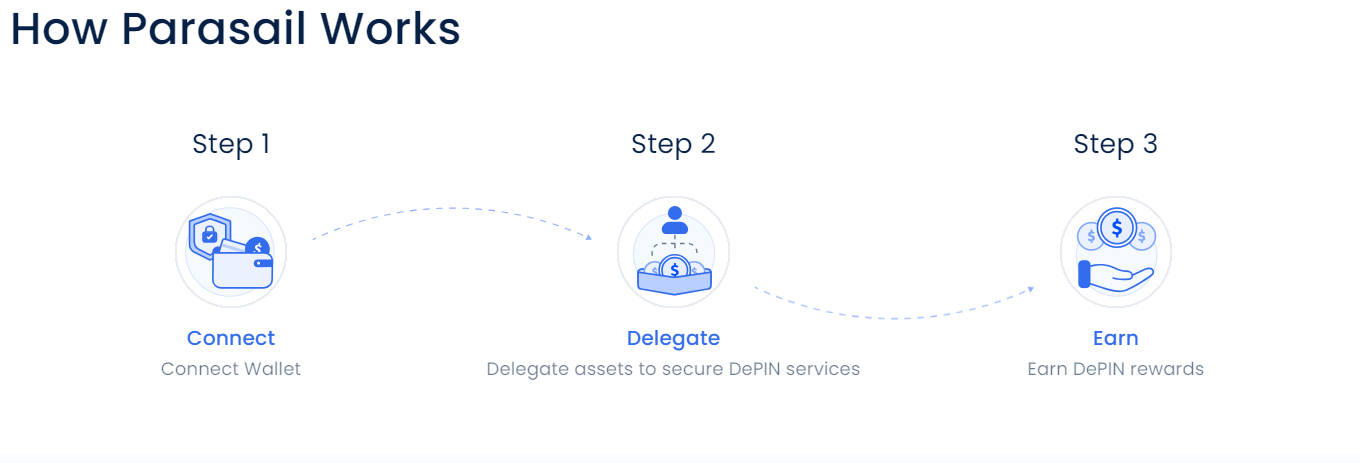
- Incentive Pools: DePIN projects can create Incentive Pools on Parasail, specifying reward policies for stakers and payout policies in case of service failure. Users can delegate their staked or restaked assets into these pools, directing their funds towards projects they believe in. This flexibility allows users to participate in projects that align with their values, fostering growth and innovation within the ecosystem.
- Native Restaking and Insurance Layer: Restaking on Parasail involves using restaked assets like BTC, SOL, and FIL to provide an insurance layer. This layer enhances the trustworthiness of DePIN projects by offering a service guarantee, making it easier for new projects to gain traction and reach a broader audience. Restakers contribute to this insurance layer, earning rewards without needing direct hardware ownership, thereby lowering entry barriers for participation.
- Delegation and Rewards: Users who delegate their assets to specific DePIN projects receive rewards based on their contributions. These rewards can come from staking, restaking, or performance incentives set by the DePIN projects. The protocol also includes mechanisms to ensure that rewards are distributed equitably, promoting fairness and inclusivity.
- Risk Management: Parasail implements risk management strategies, including slashing mechanisms, to balance potential rewards against the risks. This helps maintain investor confidence by ensuring that rewards are commensurate with the risks undertaken.
- User Benefits: For users, Parasail offers a stronger service guarantee compared to traditional DePIN setups, with compensation schemes in place for service failures. This enhances user confidence in the platform and encourages more frequent use of DePIN services.